Lunch Break Circuit
20 min total; set a phone timer; return to desk refreshed.

Educational content only — not medical advice. Free information; we do not sell products or coaching. About us
Shift workers, parents on school runs, and remote professionals all face different energy peaks. Rather than forcing a 5 a.m. routine that never sticks, this guide helps you match session type to time of day. The goal is sustainable movement — fifteen to twenty minutes that actually happen, not an ideal timetable that collapses by Wednesday.
Morning movement should respect stiff overnight joints. Start supine — knees to chest rocks, ankle circles, cat-cow on hands and knees. Add dynamic leg swings holding a door frame and ten half-depth squats. Keep intensity low for the first five minutes while your body adjusts. Gentle morning activity may help you feel more alert; avoid high-intensity intervals before breakfast if that does not suit you.
A sample 17-minute morning flow: 3 min mobility, 2 rounds of 45 sec work / 15 sec rest — marching in place, standing hip circles, incline push-ups on a dresser, bird-dog holds — then 2 min box breathing seated. Finish before showering so movement becomes part of your wake ritual. Lay out mat and clothes the night before to remove friction.
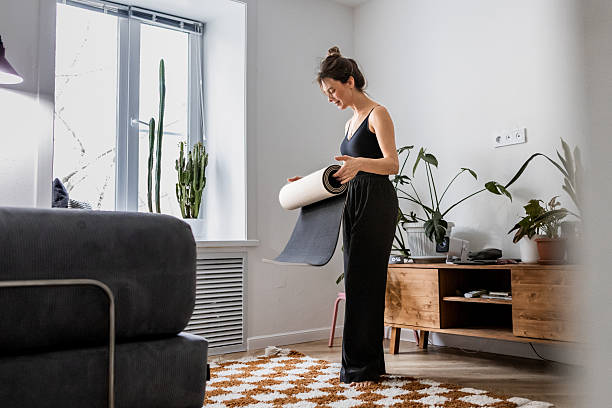
Afternoon sessions suit higher output. If you work from home, block 12:30 to 12:50 on your calendar as a movement break. Stand up from the desk thirty minutes after lunch when blood sugar stabilises. Open a window for airflow — Australian midday heat may require a fan or air conditioning on warmer days.
Try a 20-minute circuit: 5 min warm-up with arm swings and bodyweight squats, then 3 rounds of 40 sec on / 20 sec off — step-ups on a stable stair, low-impact jacks, squat pulses, plank shoulder taps. Cooldown with standing quad and calf stretches. Short movement breaks during desk work may help some people feel more alert in the afternoon.
20 min total; set a phone timer; return to desk refreshed.
Change shoes, move to a different room — mental shift into movement mode.
Drink water before starting; avoid heavy meals within 30 min prior.
Evening exercise should help you transition away from screens, not rev you up for hours. Favour slower strength — tempo squats with a four-second lowering phase — and long stretch holds. Avoid high-impact jumping after 8 p.m. if sleep quality suffers. Dim lights if possible to signal winding down to your nervous system.
Sample 18-minute evening session: 4 min hip and thoracic mobility, 2 rounds of 10 slow lunges each leg, 12 glute bridges, 30 sec side plank each side, then 5 min legs-up-the-wall with diaphragmatic breathing. Pair with phone on do-not-disturb. Many people find consistent evening slots easier than mornings because fewer meetings interfere.
Anchor two fixed slots — say Tuesday and Thursday mornings — and keep three floating slots you assign Sunday night based on the week's calendar. If a meeting runs long, swap Tuesday morning for Tuesday evening rather than skipping entirely. Linking movement to existing daily cues — after coffee, before dinner — can make habits easier to remember for many people.
Track which times felt best for two weeks. Rate energy 1–5 after each session. Patterns emerge: maybe you thrive at 7 a.m. on weekdays but prefer 4 p.m. on Saturdays. Your schedule should bend around life events — travel, school holidays, deadline weeks — without guilt. Shorten sessions during busy weeks rather than abandoning movement altogether.
Nurses, hospitality staff, and FIFO workers face rotating schedules. Treat each wake period as a potential movement window regardless of clock time. After sleep, always include extra mobility — night shifts compress recovery. Keep sessions shorter on transition days between shift types. Pack resistance bands only if you already own them; bodyweight still works in hotel rooms and site camps.
On night shifts, gentle movement before work can reduce perceived fatigue; after work, prioritise stretching and breath over intense cardio so sleep is not delayed. Communicate with household members about your movement slot to reduce interruptions. Flexibility is the product — not perfection on a single timetable.
Explore Cardio & RecoveryAdjust intensity to sleep quality and daily stress. Avoid intense exercise immediately before bed if it disrupts rest. Stay cool during hot afternoons — exercise indoors with ventilation. Consult qualified professionals for personalised advice when managing health conditions alongside irregular schedules.
July 2026
Try a 15-minute flow within 30 minutes of waking daily.
August 2026
Schedule four midday circuits on your work calendar.
September 2026
Replace 20 minutes of screen time with stretch and breath.