Heart Rate Awareness
Use talk test — speak a short sentence during rest; gasping means reduce intensity.

Educational content only — not medical advice. Free information; we do not sell products or coaching. About us
Cardio at home does not require a treadmill. Intervals of marching, step-ups, and low-impact patterns elevate heart rate in minutes. Recovery — stretching and breath work — closes each session so you return to desk or family life without lingering tension. This guide covers both sides of the equation with apartment-friendly options.
High knees in place, step-ups on a stable bottom stair, skater hops side to side, and shadow boxing can raise heart rate without jumping. Structure intervals as thirty seconds work, thirty seconds rest for eight rounds — sixteen minutes plus warm-up fits the brief. Keep movement amplitude moderate on upper floors to respect neighbours.
Short interval sessions can be one way to fit cardio into a busy day when total active time is limited. Aim for a moderate effort level during work intervals — roughly six to seven out of ten for many people. Use a fan in Australian summer heat and sip water between rounds. If dizziness appears, extend rest intervals to forty-five seconds and stop if symptoms continue.
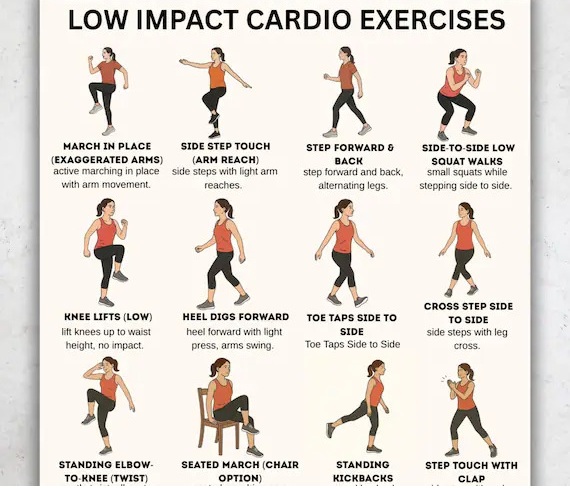
Warm up three minutes: march in place, arm swings, gentle torso twists. Main block — repeat four times: 40 sec marching with high knees, 20 sec rest, 40 sec step-ups alternating legs, 20 sec rest, 40 sec skater hops, 20 sec rest, 40 sec shadow boxing, 60 sec rest between rounds. Cooldown two minutes walking in place slowing pace.
Modify by reducing work intervals to thirty seconds or eliminating hops in favour of lateral steps. Advanced trainees add a fifth round or shorten rest to fifteen seconds. Track average heart rate if you wear a watch — note weekly trends rather than single session peaks.
Use talk test — speak a short sentence during rest; gasping means reduce intensity.
March, step-ups, and punches without stomping work for shared walls.
Interval timers remove guesswork; preset 30/30 or 40/20 protocols.
Static stretching after movement improves perceived recovery and maintains range of motion. Hold each stretch twenty to thirty seconds, no bouncing. Key areas: hip flexors in a half-kneeling lunge, hamstrings seated or standing foot on low step, chest in a doorway with forearm on frame, calves on wall lean, thoracic rotation on all fours threading arm under body.
Dedicated ten-minute stretch sessions on rest days can complement strength work. Yoga-inspired flows — cat-cow, downward dog to calf pedal, child's pose — sequence smoothly without holding long. Regular short stretching sessions are often easier to maintain than one long weekly session for many people.
Diaphragmatic breathing — hand on belly, inhale expanding abdomen, exhale slowly — downregulates stress after cardio. Box breathing uses equal four-count inhale, hold, exhale, hold; repeat five to ten cycles. Extended exhale breathing — inhale four counts, exhale six to eight — suits evening recovery before sleep.
Pair breath with gentle movement: inhale arms overhead, exhale fold forward. Nasal breathing during low-intensity cardio may feel comfortable for some people; mouth breathing is fine during higher efforts. These practices are described for general relaxation and cooldown purposes only — they are not substitutes for professional support when needed.
Two cardio sessions and two strength sessions weekly form a balanced home template for many adults. Place cardio on non-consecutive days or after upper-body strength when legs are fresh. Rest days include walking, gentle stretching, or breath only — complete cessation of movement is rarely necessary unless fatigued.
Signs you need extra recovery: elevated resting heart rate, irritability, poor sleep, or repeated failed reps at usual loads. Swap interval cardio for a twenty-minute walk and resume intervals next session. Periodisation applies to cardio too — every fourth week reduce interval rounds by one. Sustainable rhythm beats heroic single weeks.
Plan Your ScheduleStop cardio if chest discomfort, severe breathlessness, or dizziness occurs. Stay hydrated in heat. Use stable steps for step-ups; hold a rail when available. Stretch to mild tension, not pain. Seek professional advice for cardiovascular concerns before starting interval training.
July 2026
Two 16-minute cardio sessions weekly at 30/30 work-rest.
August 2026
Five minutes static stretching after every workout.
September 2026
Add 5 min box breathing to each cooldown daily.